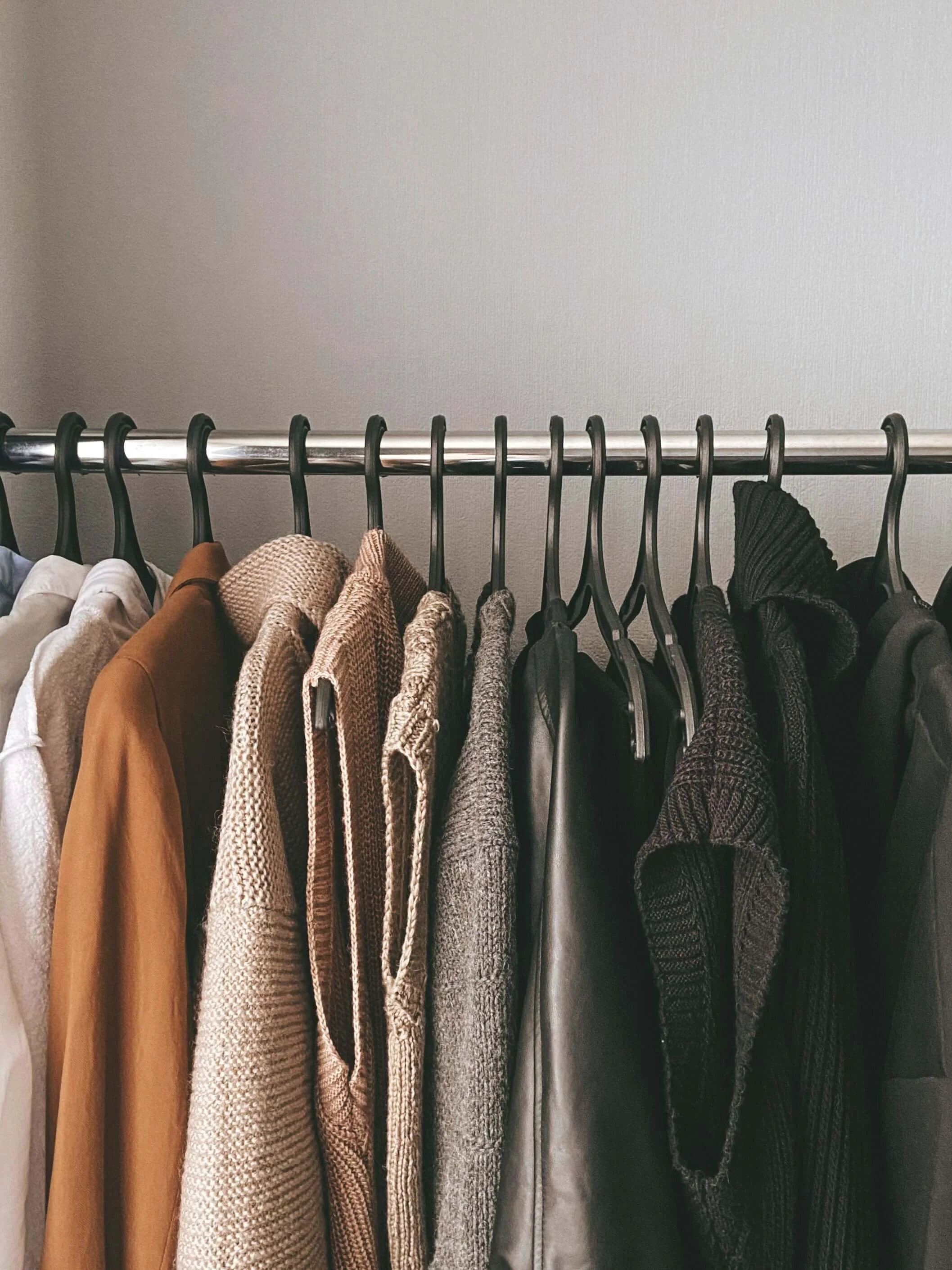
I wasn't lacking clothing. I was lacking clarity.
I didn't expect my closet to be one of the biggest sources of friction in my day. But over time, that's exactly what it became.
A colleague of mine often talks about eliminating drag, the small, almost invisible things that quietly drain your energy. In business, drag might look like inefficient systems or unnecessary meetings. But it shows up in everyday life too. For me, one unexpected source of drag has been my closet.
I have too many options.
So many that I keep reaching for the same pieces because they're easy. The rest sits there creating noise.
Some of the most productive people eliminate this problem entirely by adopting a uniform.
Steve Jobs famously wore the same black turtleneck every day.
Mark Zuckerberg has his gray t-shirts.
Their logic is simple: remove one daily decision so your mental energy can be spent elsewhere. There's something admirable about that level of simplicity.
But that approach isn't for me.
Clothing is one of the ways I express myself. I enjoy the creativity of putting together an outfit and the way clothing can reflect how you feel in a given moment. A strict uniform might eliminate drag. But it would also eliminate something I enjoy.
The real problem isn't clothing. The real problem is too much noise. At some point my closet stopped feeling like a curated collection and started feeling like accumulation.
Too many choices.
Too many pieces that don't quite feel right.
Too many items competing for attention.
The abundance of options created the opposite of what I wanted. Instead of making getting dressed easier, it created decision fatigue.
I saw something else too: I have done my fair share of stress shopping over the years. Seeing that wasn't the most comfortable moment.
But it was an honest one.
One realization kept surfacing as I worked through my closet. Despite having racks of clothing, I was rotating the same handful of pieces over and over again. And when I wasn't wearing those, I often defaulted to athleisure because it was easy. There's nothing wrong with comfortable clothing. But over time it started to feel misaligned.
I realized that the way I was dressing didn't reflect how I wanted to show up for myself. Instead of feeling intentional, it felt automatic. Instead of feeling polished, it felt like I was moving through the day on autopilot.
That was the moment I understood that the problem wasn't just the size of my closet. It was that my wardrobe no longer fit the life I'm building.
This is, in many ways, a problem rooted in abundance. And abundance, when you pause to recognize it, is a privilege. Many of the clothes I remove from my closet don't go to waste. When I finish this process, I send a large portion of them to family in the Dominican Republic, where they can continue to be worn and appreciated. Clothing has a life beyond our own closets.
There are other ways to pass clothing forward. Women's shelters often accept professional clothing to help women prepare for job interviews and reenter the workforce with confidence. Organizations across the country collect dresses for young girls preparing for prom who might not otherwise be able to afford one. A dress that has become "old" to you can still open a door for someone else.
As I finish this closet reset, I plan to curate a list of organizations doing this work well for anyone who wants to participate. Simplifying my closet is about eliminating drag in my own life. It's also an opportunity to make sure the clothing that once served me can now serve someone else.
You didn't fail because you bought a lot of clothes. You're at the point where you want your wardrobe to match the life you're building now. That shift happens to a lot of people in their thirties and forties, especially entrepreneurs who are becoming more intentional about how they spend their time, money, and attention.
Many of the pieces hanging in my closet belong to different chapters of my life.
Different routines.
Different priorities.
Different versions of myself.
And there's nothing inherently wrong with that. But eventually you reach a point where you want your environment, including your closet, to support the life you are designing.
This process isn't punishment.
It's a reset.
To make sure I never end up back in the same place again, I created a set of principles for my closet. These rules are less about minimalism and more about intentional living. They help me make faster decisions about what stays, what goes, and what I allow into my wardrobe.
The Billion Dollar Rule. If it doesn't make me feel like a billion bucks, it goes.
The Simplicity Rule. If a piece is overly complicated or fussy, it leaves.
The Elevated Casual Rule. Even my casual clothing has to feel elevated.
The Fabric Rule. If two pieces have similar silhouettes, I keep the one with the better fabric.
The Wear-and-Tear Rule. If something is worn out, stretched out, faded, or full of holes, it leaves.
The Color Confidence Rule. If I question the color or pattern in any way, it's gone.
The Values Rule. If I am aware of the manufacturing process behind a brand and it doesn't align with my values, the item has to go. I regret purchasing some fast fashion pieces. They can move on and be useful to someone else. But I won't be supporting those businesses.
These are the principles that work for me. Borrow what resonates. Leave what doesn't. Build a system that reflects your life and your values.
Once I defined my principles, organizing my closet became much simpler. Instead of organizing by color or category alone, I organized by how I live and get dressed.
My closet is now divided into a few core sections. Everyday / Elevated Casual holds the pieces I reach for most often. They work for meetings, errands, content, and daily life. This is the largest and most visible section of my closet. Work-Specific holds more structured, tailored pieces that I wear in professional settings. Going Out / Event holds dresses and statement pieces reserved for evenings or specific occasions. And Workout / Athleisure is kept separate so it doesn't blend into my everyday wardrobe.
Within each section, I still organize visually so everything feels calm and easy to navigate. But the primary structure is based on function, not just appearance. This shift alone made getting dressed easier. Because instead of searching through everything I own, I'm choosing from a section that already matches the shape of my day.
Most of us don't get dressed based on color. We get dressed based on what our day requires. Organizing your closet this way removes an entire layer of decision-making. The goal wasn't to create a perfectly organized closet. It was to create one that supports how I live.
An unexpected benefit of this process is that it changes the way you shop. Stress shopping, for me, often looked like a quick moment of relief. A sense that something new might reset how I felt that day. But when your closet is already full of pieces that don't quite feel right, buying something new rarely solves the problem. It adds another layer to the noise.
Organizing my closet forced me to admit something:
I wasn't lacking clothing.
I was lacking clarity.
Once you can clearly see what you own, and once every piece in your closet earns its place, it becomes much harder to justify impulse purchases. Now when I consider buying something new, I ask: does this piece belong to the wardrobe I'm intentionally building? If the answer is unclear, the purchase probably isn't necessary. And that shift, from accumulation to curation, is breaking my cycle of stress shopping.
What started as a seasonal closet swap turned into something much bigger. It became a reminder that the environments we build around ourselves either support our lives, or quietly work against us. A closet should not feel like a storage unit. It should feel like a curated space that reflects who you are today and where you're going next.
Because when the small systems in your life work well, even something as simple as your closet, you create a little more room for the things that matter most.
And sometimes clarity doesn't come from adding more.
Sometimes it comes from removing what no longer belongs.
And learning to recognize that, in your closet and in your life, is a different kind of discipline